politics & trust · 3 min
Are we really more divided than ever?
Do we actually disagree more — or just hate each other more?
The division is real. But the country you're furious with is partly imaginary — and that turns out to be measurable.
Our observer files a strange report: the humans' positions on most actual questions — tax, trade, even the hot-button issues — have drifted apart far more slowly than everyone believes. What has moved, fast, is how they feel about each other. And each tribe's mental picture of the other tribe is wrong by roughly a factor of two.
Here's the honest layout: what most people are told, the researchers who measured the illusion, and how divided we most likely actually are.
What you're usually told
We've never been this divided
Cable news, campaign emails and your feed
Every election is existential, talk of 'two Americas' (or two Britains) is everywhere, and polls duly find record shares who call the other party a threat to the nation. Division is the story that keeps you watching, donating and scrolling — which is worth remembering when you notice who's telling it.
Social media broke us
Jonathan Haidt and much of the tech commentariat
Echo chambers plus outrage-ranking algorithms sorted us into tribes and fed each tribe the worst of the other. The timing fits the smartphone decade, the mechanism feels obvious from the inside, and it names a fixable villain — which is partly why it's the most popular explanation.
It's the other side that radicalised
Partisans in both directions — each with academic backing
One literature argues polarisation is asymmetric — one side moved further and faster. The mirror-image case says elites and institutions drifted away from ordinary voters, who then stopped trusting them. Both versions let your own tribe stay reasonable — which should make you suspicious of how good either one feels.
The contrarian read
The perception-gap read
More in Common; political scientists like Iyengar, Lelkes and colleagues
Measure two different things and the story splits. Feelings about the other party have curdled sharply — that's 'affective polarisation', and it's real. But actual policy positions moved far less: on most issues, majorities overlap more than either side believes. More in Common's research found each side imagines an opposition roughly twice as extreme as the one that exists, the most politically engaged carry the biggest distortions, and about two-thirds sit in an 'exhausted majority' that hates the fight. The division we feel is partly a shared hallucination about who's on the other side.
Our read
Most likely: the hatred is real and rising, the disagreement is smaller than it looks — and a meaningful slice of the divide is a correctable illusion about the other side.
Our confidence: that dislike and distrust across the divide rose sharply in the US, noticeably in Britain — high. That ordinary people's policy views split at anything like the same pace — low; they mostly didn't. That social media alone did it — low.
Separate the two kinds of division and the picture clears. Parties and the politically loud have genuinely sorted — by identity, place and culture as much as policy — and feeling-thermometer measures of cross-party dislike have climbed for decades. But issue-by-issue, publics moved modestly, and each side's estimate of the other is reliably, measurably wrong: the perception gap roughly doubles the other side's extremists, and following more news makes the estimate worse, not better. You are angriest at a caricature.
The cross-country test is the tell for the social-media story: if the platforms mechanically polarise, every wired democracy should move together. They don't — cross-country studies find affective polarisation soared in the US while actually falling in several countries on the same apps. That points the finger at structures — a two-party system where every identity stacks onto one axis, primaries, partisan media — more than at phones alone. Britain sits in between: Brexit built two tribes that outlived the referendum, but the underlying policy gaps stayed surprisingly narrow. The hopeful part is that illusions respond to information: in studies, showing people the other side's real views shrinks the gap. Division built partly on misperception can be partly unbuilt.
- ≈50%Affective spiral, correctable — dislike keeps outrunning disagreement, pumped by engagement media and misperception; it eases where media diets and institutions change.
- ≈30%The sort hardens — identity stacking (party = culture = place = class) compounds into genuinely separate nations, US-style, and Britain drifts the same way.
- ≈20%Overstated all along — the loud fringes and the news cycle manufactured a divide the exhausted majority never joined; it fades as attention moves on.
How sure are we?
Most 'record division' headlines measure feelings about the other party, not distance on issues — and people who follow politics most closely hold the least accurate picture of the other side. Before repeating a division stat, check which kind of division it actually measured.
Where this comes from
- Pew Research Center (2014) — Political Polarization in the American Public The canonical mapping of how far the US public had actually sorted — the baseline everyone argues from.
- Boxell, Gentzkow & Shapiro (NBER) — Cross-Country Trends in Affective Polarization The cross-country test: US affective polarisation rose fastest of twelve democracies; several fell — same platforms, different outcomes.
- More in Common (2019) — The Perception Gap The illusion, measured: each side overestimates the other's extreme views by roughly double; news consumption widens the error.
- Iyengar, Lelkes, Levendusky, Malhotra & Westwood (2019) — The Origins and Consequences of Affective Polarization in the United States — Annual Review of Political Science The academic anchor for 'we dislike each other more without disagreeing much more'.
Go deeper — read the book
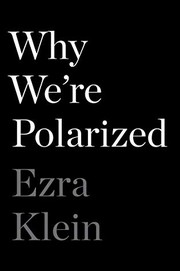
The clearest systems-level account of how identity stacked onto party and made everything feel existential — written to explain the machine, not to blame a tribe.
The mainstream synthesis of the US case — the book the whole argument now answers to.
Written with AI and editorially curated. Talescout always labels AI text (EU AI Act, Art. 50). Numbers are considered judgements, not measurements.